
Residential Service
Soft Washing
Low-pressure, eco-friendly washing for delicate surfaces.
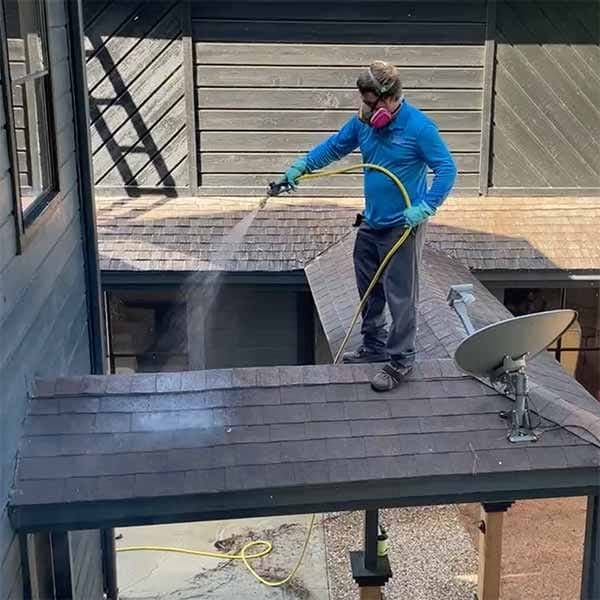
Not every surface on your property can take a direct blast of water, and that's really the whole reason soft washing exists as its own method rather than just a gentler setting on a pressure washer. Painted fascia, older stucco, window screens, delicate trim—these materials weren't built to withstand force, and treating them like a driveway or a slab of concrete is how homeowners end up with cracked stucco or paint peeling off in sheets.
How Soft Washing Actually Works
Soft washing solves that by doing the cleaning chemically instead of mechanically. We apply a cleaning solution at low water pressure, let it sit long enough to break down algae, mildew, and grime at the surface level, and then rinse it away. It's the same underlying idea behind power washing in the sense that we're still removing built-up dirt and organic growth, but the pressure stays low enough that it never risks the surface itself. That distinction matters most on surfaces you can't just replace easily—a painted screen porch, an aging stucco chimney, wood trim with thirty years of paint layers on it.
When We Choose Chemistry Over Pressure
We also lean on soft washing any time a homeowner isn't sure whether a surface can handle pressure at all. Rather than guess, we look at the material, the condition it's in, and how it's held up over time, and we choose a pressure and chemistry combination that fits. Our solutions are biodegradable, and we pre-wet any landscaping nearby so nothing gets stressed by runoff.
Matching the Method to the Surface
If you've got a surface somewhere on your property that looks dingy but feels too fragile to pressure wash—an old screen enclosure, chalky painted siding, a stucco accent wall—that's usually a soft washing job. We'd rather match the right method to the surface than force one approach on everything, and we stand behind the result with our 100% satisfaction guarantee either way.
Our Process
How It WorksStep By Step
- 1
Identify what the surface can take
Before we touch anything, we look at what we're cleaning—painted wood, screen enclosures, older stucco, delicate trim—and decide how much pressure, if any, that surface can actually handle.
- 2
Match the chemistry to the job
We mix an eco-friendly, biodegradable cleaning solution suited to what's growing or staining the surface, whether that's algae, mold, pollen film, or general grime.
- 3
Apply low pressure and let the solution work
Instead of blasting, we apply the solution at low pressure and give it time to break down what's on the surface at a chemical level, not a force level.
- 4
Rinse gently and check the result
A light rinse clears the loosened dirt away, and we walk the surface with you afterward to confirm nothing was stressed, cracked, or discolored in the process.
- 5
Flag anything that needs a different approach
If we find a surface that's too far gone for soft washing alone—rotted wood, failing paint—we'll tell you honestly rather than wash over a problem.
Where We Work
Soft Washing Near YouNorth Houston & Beyond
Questions
Frequently Asked Questions
What exactly makes soft washing different from regular power washing?
Soft washing swaps out high water pressure for a cleaning solution that does the chemical work of lifting algae, mold, and grime, so the water pressure itself stays low. Traditional power washing relies on force alone, which is why it can strip paint or damage delicate materials that soft washing leaves untouched.
What surfaces around my property actually need soft washing instead of pressure washing?
Painted surfaces, window screens, older or textured stucco, vinyl siding, and any trim or fascia that's been painted rather than sealed all do better with soft washing. These materials can crack, dent, or lose their finish under direct high-pressure water, so a lower-pressure approach protects them while still getting them clean.
Is soft washing actually strong enough to remove built-up algae and mildew?
Yes, and often it cleans deeper than pressure alone would. The solution breaks down algae and mildew at the root instead of just knocking the surface layer off, which is part of why soft-washed surfaces tend to stay cleaner longer than surfaces that were just blasted with water.
Will soft washing hurt my paint, caulk, or trim?
No—that's the entire reason we use it on those surfaces in the first place. The low pressure and biodegradable solution are formulated to lift dirt and organic growth without forcing water behind trim, degrading caulk lines, or stripping paint the way high-pressure water can.
Are the cleaning solutions safe for my kids, pets, and landscaping?
We use biodegradable, eco-friendly solutions and pre-wet any nearby plants, grass, or flowerbeds before we start. Once the surface is rinsed, there's nothing lingering that would be unsafe for kids or pets to be around.
How do I know if my house or business needs soft washing versus a different service?
If you're seeing dark streaks, green film, or dulling on a painted or delicate surface, soft washing is usually the right call—it's the technique behind our house washing, roof cleaning, and several other services. Tell us what you're looking at and we'll recommend the right approach for that specific surface.