
Residential Service
Deck Cleaning
Careful washing that revives wood and composite decks.
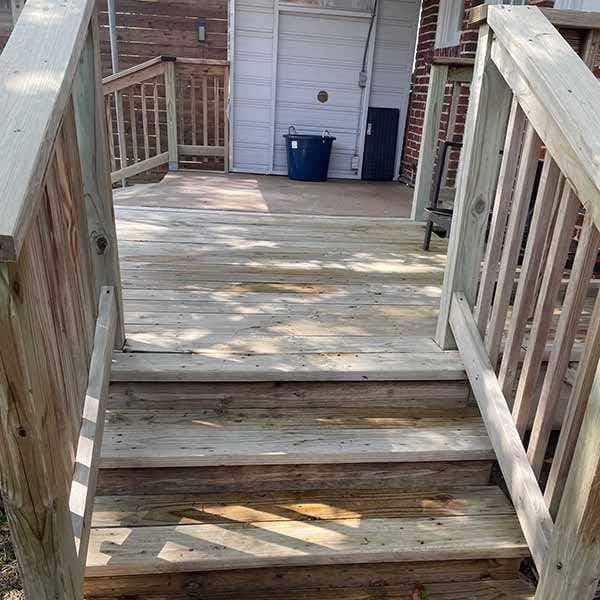
Composite decking was supposed to be the low-maintenance answer, and in a lot of ways it is—until you notice the surface has gone dull and there's a faint green tint settling into the grain pattern, especially in shaded corners that never quite dry out. Wood decks have their own version of the same problem: graying boards, mildew tucked into the gaps between them, and the occasional splinter starting to lift where moisture's been sitting too long. Both materials end up needing the same thing eventually, just with very different cleaning approaches underneath.
Composite and Wood Need Different Pressure
That difference matters more than people expect. Composite decking can scuff, fuzz, or lose its factory finish if it gets hit with the kind of pressure that a wood deck can shrug off, so we don't run one setting across every job—we adjust the equipment for what's actually underfoot. Either way, we lean on a biodegradable pre-treatment to break up the mildew and buildup first, which means the power washing step that follows is doing cleanup work, not the heavy lifting, and that's exactly what keeps boards from getting damaged.
Where Mildew Actually Hides Between Boards
The gaps between deck boards are where most of the actual problem lives, and they're also the part most people never think to check. Mildew and trapped moisture sit down in those seams long after the top of the board looks dry, which is why we work solution and rinse water down between the boards instead of treating the deck like one flat surface. If you're planning to stain or seal afterward, this step matters even more—sealer applied over hidden mildew or old residue just traps the problem underneath a fresh coat.
A Deck You'll Actually Use Again
A clean deck changes how a backyard actually gets used—it's the difference between hosting a cookout on gray, tired boards and having a space that looks like it's worth spending an evening on. Whether you're prepping for a stain job, getting ready for a family gathering, or just tired of looking at mildew streaks every time you step outside, it's a job that pays off in exactly the place you spend your time.

Our Process
How It WorksStep By Step
- 1
Check the boards up close
We look at what we're actually dealing with—raw or stained wood, or composite decking—and note any soft, splintering, or gapped boards where mildew has been building up unseen.
- 2
Pre-treat the buildup
A biodegradable cleaner formulated for decking goes down first, giving it time to break up the graying, mildew, and grime lodged in the wood grain or textured composite surface.
- 3
Wash at the right pressure for the material
Wood decking and composite decking don't get treated the same—composite in particular can fuzz or scuff if the pressure's too high, so we dial the equipment in for what's underfoot, not a one-size setting.
- 4
Clean between and under the boards
The gaps between deck boards trap moisture and organic buildup that never gets touched by a surface-only clean, so we work water and solution down into those seams where mildew actually lives.
- 5
Rinse and let it dry clean
A final rinse clears the loosened grime completely, leaving bare wood ready for stain or sealer and composite boards restored to their original color and texture.
Where We Work
Deck Cleaning Near YouNorth Houston & Beyond
Questions
Frequently Asked Questions
Is deck cleaning different for wood versus composite decking?
Yes, substantially. Wood decking can handle a bit more pressure but is prone to splintering and graying if the wrong technique is used, while composite decking needs lower pressure and different chemistry entirely, since too much force can scuff or fuzz the surface finish permanently.
My deck has dark spots between the boards—is that mold?
It's usually mildew, and it collects in the gaps between boards because that's where moisture sits the longest after rain. A surface-only rinse won't touch it, which is why we work solution down into those seams rather than just washing across the top of the decking.
Should I clean my deck before staining or sealing it?
Yes—stain and sealer won't bond properly over graying, mildew, or old sealer residue, so a proper cleaning is the right first step before any refinishing project. We can time the cleaning so the wood is ready for your stain crew, or handle sealing as a follow-up if you'd like it done in one visit.
Will pressure washing damage my wood deck?
Too much pressure applied incorrectly can splinter wood and blast out the softer grain, leaving the surface fuzzy and uneven. We control pressure specifically for decking and use pre-treatment chemistry to do most of the work, so the wash itself stays gentle on the boards.
How often should a deck be cleaned in this area?
Most wood and composite decks in Tomball, Cypress, and Spring do well on an annual cleaning, especially with our humidity keeping mildew active most of the year. Decks shaded by trees or that see heavy foot traffic and outdoor entertaining may benefit from a mid-season touch-up.
Can you clean a deck that's about to host an event?
Absolutely, and it's one of the more common reasons people call us. We'll work around your event date, and a freshly cleaned deck makes a real difference for anyone hosting a gathering, cookout, or holiday get-together outdoors.
What about the railings and stairs—are those included?
Yes, railings, stair stringers, and any attached benches or planters get cleaned as part of the job, not just the flat walking surface. A deck rarely looks finished if the rest of the structure still shows the same grime the boards did.