
Residential Service
Fence Cleaning
Restores gray, weathered wood and vinyl fences.
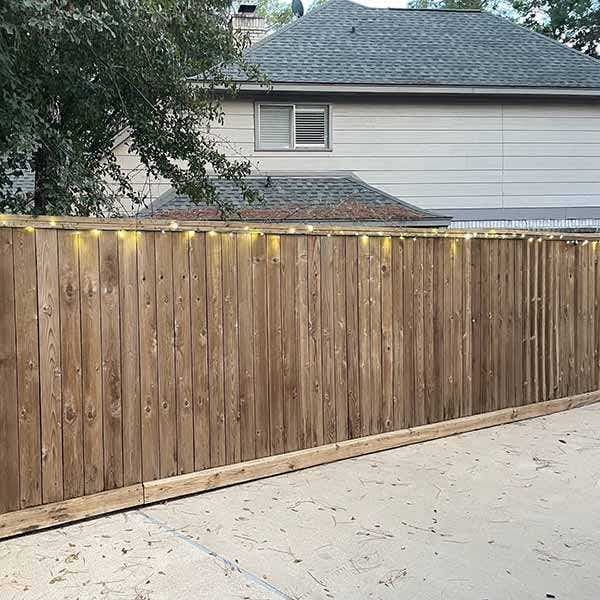
Wood fences don't fail all at once—they gray out a board at a time, usually starting on the side that gets the least sun and the most shade from a tree line or the house next door. What looks like the wood just "aging" is really sun breaking down the surface fibers combined with mildew moving into anywhere that stays damp a little too long. Vinyl has its own version of the same problem: instead of graying, it yellows from UV exposure or picks up a greenish film in the shadier stretches of the yard.
Wood and Vinyl Don't Get the Same Pressure
The tricky part of fence cleaning is that wood and vinyl don't respond to pressure the same way, and neither does new wood versus a ten-year-old fence that's already soft at the joints. We're a power washing crew, but we don't run one pressure setting down an entire fence line—old or weathered wood gets noticeably less force than a solid vinyl panel, because too much pressure on tired wood grain doesn't clean it, it splinters it and leaves the surface fuzzy and rough instead of smooth. A biodegradable pre-treatment does the heavy lifting on algae and mildew first, so the actual wash is more of a rinse than a fight.
Why Cleaning Comes Before Staining
If you're planning to stain or seal a wood fence, cleaning it properly beforehand isn't optional—stain only bonds well to bare, clean wood, and skipping this step is one of the most common reasons a new stain job looks patchy within a year. We time the wash so there's enough dry time before any finish goes on, and we're glad to talk through that timeline when we quote the job.
Every Panel Backed By Our Guarantee
Whether it's prepping for stain, getting a yard ready to sell, or just tired of a gray fence dragging down an otherwise sharp-looking yard, we treat every panel like it's the one that has to hold up. If a section doesn't come out the way you expected, we'll come back and fix it—no debate, no upcharge, just our 100% satisfaction guarantee doing what it's supposed to do.
Our Process
How It WorksStep By Step
- 1
Walk the fence line
We check the material and condition board by board—wood, vinyl, or a mix—and flag any soft, splitting, or already-weathered sections that need lower pressure or a gentler pass so we don't do more harm than good.
- 2
Biodegradable pre-treatment
An eco-friendly cleaning solution goes on first to loosen algae, mildew, and the gray weathering baked into wood grain, or the green film and yellowing common on vinyl, so the wash itself doesn't have to force anything out.
- 3
Pressure-controlled wash
We wash panel by panel with the pressure dialed down for the material in front of us—old or soft wood gets noticeably less force than solid vinyl—so grain doesn't fuzz up, splinter, or blow out at the joints.
- 4
Rinse and stain-ready finish
A final rinse clears solution and loosened grime completely, leaving wood clean and dry enough to accept stain or sealant if that's next on your list—backed by our 100% satisfaction guarantee.
Where We Work
Fence Cleaning Near YouNorth Houston & Beyond
Questions
Frequently Asked Questions
Why has my wood fence turned gray?
Sun exposure breaks down the natural lignin in wood fibers, and mildew takes hold in whatever shade and moisture is left, which together turn wood a dull, uneven gray over a season or two. It's weathering, not rot, and a proper wash brings the original tone back in most cases.
Why is my vinyl fence turning yellow or growing green patches?
Yellowing usually comes from UV exposure and airborne pollutants building up on the surface over time, while green patches are algae taking hold in shaded, damp spots along the fence line. Both clean off vinyl fairly easily since the material itself doesn't absorb grime the way wood does.
Can pressure washing damage or splinter an old wood fence?
Yes, if the pressure isn't controlled for the wood's condition—too much force on aged or soft wood can raise the grain, cause fuzzing, or blow out weak joints. That's exactly why we walk the fence line first and adjust pressure board by board instead of running one setting across the whole yard.
Will cleaning my fence hurt the grass or plants next to it?
No. We use a biodegradable cleaning solution and pre-wet any grass, mulch, or garden beds running along the fence line before we start, so nothing absorbs runoff it shouldn't. Tell us about any especially delicate landscaping and we'll take extra care around it.
Should I clean my fence before staining or sealing it?
Yes—stain and sealant only bond well to clean, bare wood, so washing off old gray weathering, mildew, and surface grime first makes a real difference in how evenly the finish takes and how long it lasts. We can time the wash so the wood has enough dry time before you stain.
How often should a fence be cleaned?
Most wood and vinyl fences in Tomball, Cypress, and Spring hold up well with a cleaning every twelve to eighteen months, though fence lines shaded by trees or bordering a wetter yard can gray or green up faster. We'll give you an honest read on your specific fence rather than a blanket answer.
How long does fence cleaning take?
A typical residential fence takes one to three hours depending on total length, material, and how much buildup we're removing. Long fence lines or ones mixing wood and vinyl sections may run a bit longer, and we'll give you a realistic window when we quote the job.